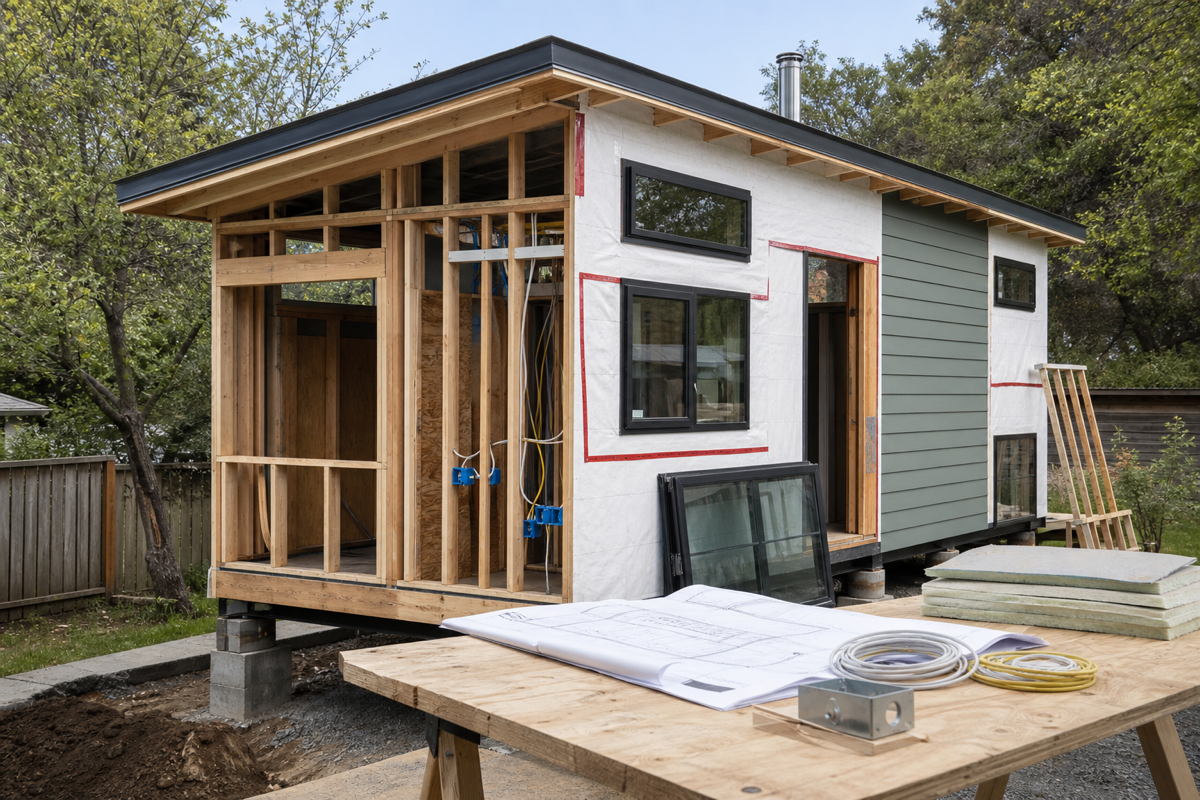
$20K reality check

Can You Build a Tiny House for Under $20K?

Possible in narrow DIY or exclusion-heavy cases, but not a reliable turnkey tiny-home budget. Use this page to see what has to be excluded, reused, donated, deferred, or locally verified for a $20,000 target to survive contact with the real project.

Page last reviewed: 2026-07-13

Interactive planning tool

$20K reality checker

Allocate a $20,000 cash target across major buckets. Leave a bucket at zero only if it is truly handled, excluded, donated, reused, deferred, or not part of the project. These are planning estimates, not market averages or final bids.

Structure and build budget
Placement and site budget
Systems and protection

No prefilled number here is a national average, because this page is not using current sourced cost data. Enter your own planning assumption.

Reality check result

Your $20K result will appear here

This checker separates user-entered assumptions from warnings. It does not prove a project is feasible, legal to place, insurable, financeable, code-compliant, or all-in.

Default conclusion A $20K target is fragile until land, placement, utilities, permits, tools, labor, and contingency are explicitly handled.

What has to be true

When a $20K target has a possible path

There are narrow cases where the structure budget can stay low. The tradeoffs need to be named before the number means anything.

Land is already handled

The target usually cannot absorb land purchase, lot rent, major access work, septic, water, and utility extensions. Verify zoning, HOA, deed, health, and utility constraints before relying on free or family land.

Labor is heavily DIY

A low cash budget often assumes unpaid labor, enough skill to avoid expensive rework, and time to manage sourcing. That is an assumption, not a guarantee.

Materials are simple or reused

Salvaged, donated, used, or unfinished materials can reduce cash cost, but they can add inspection, safety, durability, transport, and rework questions.

The project is not turnkey

A finished builder package, delivery, setup, inspections, utility connections, and site work can quickly move the project outside a $20K structure-only claim.

Usually excluded

What $20K tiny house claims often leave out

Before treating a low number as real, ask what is outside the number and who is responsible if that cost appears later.

Common exclusions

  • Land, site lease, or community lot costs.
  • Delivery, towing, crane, setup, anchoring, foundation, or blocking.
  • Utility hookups, electrical service, water, septic, sewer, or off-grid systems.
  • Permits, inspections, plans, engineering, surveys, and correction work.
  • Tools, rentals, safety gear, waste disposal, storage, and replacement materials.
  • Financing, insurance, taxes, rework, and contingency.

Red flags

  • A seller or video ignores where the tiny house can actually be placed.
  • The budget has no site-work, utility, permit, inspection, or contingency line.
  • The project assumes free labor, free tools, or free materials without naming the source.
  • Land is purchased before zoning, utilities, septic, HOA, deed, lender, and insurer checks.
  • A shell, shed, RV, or cabin is described as housing before local classification is verified.

Safer next steps

Before chasing a $20K build

Use the $20K number as a stress test, then move to written quotes and local-office verification.

  1. Write down exactly what the $20K includes and excludes.
  2. Confirm whether the number is structure-only, DIY labor, unfinished shell, used unit, shed conversion, or all-in project budget.
  3. Use the full cost calculator to add land, delivery, site work, utilities, permits, financing, insurance, lot rent, and contingency.
  4. Use the placement tool to identify planning, building, health, HOA, deed, lender, insurer, and utility checks.
  5. Get written quotes before deposits, land offers, or nonrefundable material purchases.
  6. Keep the answer as `UNKNOWN` until local offices and vendors confirm the major assumptions.