1
What is the product?
Request the proposed classification, intended use, plans, labels, standards, chassis or foundation details, dimensions, and weight records that actually exist.
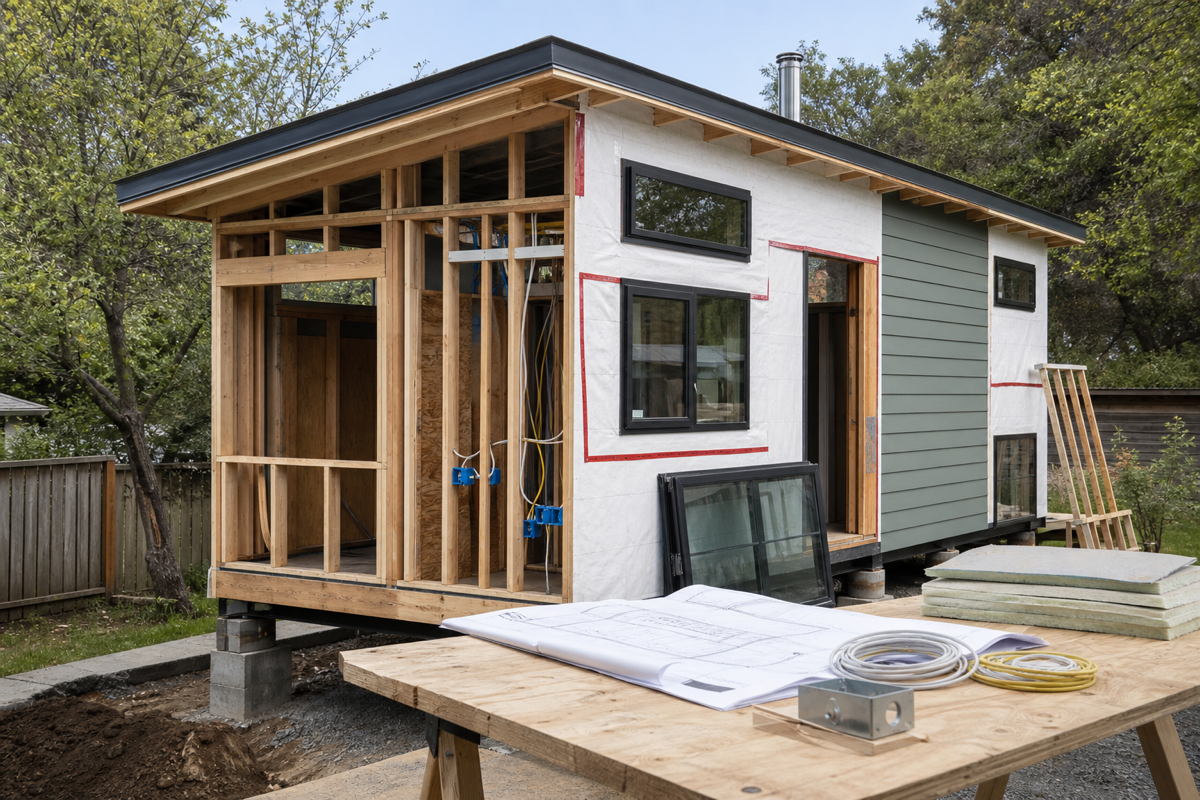
Seven common paths
No row is automatically cheaper or better. The useful question is whether the scope, proof, and remaining work fit your skills, site, local review path, and tolerance for coordination.
| Path | May fit when | Responsibility you inherit | Get in writing | Still needs a separate answer |
|---|---|---|---|---|
| Plans or floor plans | You or your contractor can turn drawings into a complete, locally reviewed build. | Materials, trade sequencing, site details, permits, inspections, and any engineering or revisions not included. | Every sheet included, design criteria, engineering status, revision rights, support, and refund terms. | Whether the set is sufficient and acceptable for your site and review authority. |
| Kit | You can manage assembly and every item outside the package. | Labor, tools, missing components, substitutions, foundation or trailer, systems, finishes, unloading, and corrections unless named. | Bill of materials, excluded components, stamped details if offered, assembly instructions, delivery, unloading, substitutions, and warranty. | Whether the package and completed assembly fit the intended building and placement path. |
| Shell | You have a credible plan and qualified help for everything after the structure closes in. | Plumbing, electrical, heating and cooling, insulation, interiors, fixtures, finish inspections, and site connections unless named. | Exact completion boundary, materials, weather-tight standard, rough-ins, inspection records, delivery, setup, and correction responsibility. | Who will complete and certify each remaining system and inspection. |
| Tiny house on wheels (THOW) or trailer build | Mobility is essential and you can coordinate chassis, weight, road, build, and placement questions separately. | Weight management, loading, braking and towing compatibility, build attachment, utilities, setup, and local-use verification. | Chassis design, manufacturer and VIN records, gross vehicle weight rating, axle and tire ratings, build drawings, actual weight, and inspection records. | Road documentation does not answer where or how the unit may be occupied. |
| Custom tiny-home builder | You want one party to own a clearly defined portion of design and construction. | Anything excluded from design, permitting, site work, delivery, setup, utilities, corrections, and final approval. | Plans, proposed standard, license and insurance where applicable, references, scope, schedule, payment stages, change orders, inspections, warranty, and cancellation terms. | Whether the builder's proposed product and documents fit your property and intended use. |
| Conventional ADU contractor | You are pursuing a site-built accessory dwelling and need local design, permit, and trade coordination. | Any owner-supplied design, surveys, utility work, fees, site conditions, or approvals excluded from the contract. | Jurisdiction experience, design and permit scope, trade responsibility, allowances, site assumptions, inspections, change orders, and closeout documents. | Whether an ADU is available on the property and whether this contractor's scope covers the full local process. |
| Park-model or RV-style product | Your intended use and destination match the product category and the destination will review it in that lane. | Transport, setup, utility connection, site or park approval, occupancy constraints, and items outside the product standard. | Exact product category, standard and label, dimensions and weight, delivery, setup, warranty, destination requirements, and cancellation terms. | A product label or standard does not decide permanent residential use or local placement. |
Before comparing prices
A plan, kit, shell, and finished home can all be advertised with one number while covering radically different work. Put these six responsibilities beside every quote.
Before a deposit
The exact record changes by path, but the question should not disappear because a seller uses a reassuring product label.
1
Request the proposed classification, intended use, plans, labels, standards, chassis or foundation details, dimensions, and weight records that actually exist.
2
Request the drawing index or bill of materials, labor, equipment, systems, finishes, delivery, unloading, setup, site work, inspections, and every named exclusion.
3
Name who contacts planning, building, health, fire, utility, road, park, HOA, lender, and insurer decision-makers, and who answers review corrections.
4
List access, grade, soil, foundation or anchoring, wind or snow criteria, water, wastewater, power, drainage, fire access, delivery, and setup assumptions.
5
Tie payment stages to visible work, inspections, documents, delivery, and correction milestones rather than calendar dates alone.
6
Define authorization, pricing, schedule impact, substitutions, hidden conditions, rejected work, transport damage, failed inspections, and incomplete records.
7
Request deposit, refund, cancellation, delay, storage, warranty, dispute, lien, and unfinished-work terms before money becomes nonrefundable.
Slow down
Source boundaries
These sources help identify documents and standards to ask about. They do not approve a specific product, contractor, property, permit, occupancy, loan, or insurance policy.
The 2021 International Tiny House Provisions collect model-code paths relevant to some tiny-house categories. Local adoption and project acceptance vary.
Open the ICC provisionsHUD explains certification labels for manufactured homes. A generic tiny house is not automatically a HUD Code manufactured home.
Open HUD homeowner resourcesManufacturer, VIN, certification-label, and weight records can matter to a trailer purchase. They do not establish residential occupancy.
Open NHTSA certification FAQsFTC contractor guidance supports written estimates and contracts, checking credentials where applicable, and resisting full upfront payment pressure.
Open the FTC guidanceRVIA identifies RV and park-model standards and describes intended recreational or seasonal use. This is industry guidance, not local approval.
Open the RVIA standards page Read RVIA's product definitionSources last checked: 2026-07-29.